What drives landscape construction and base-work cost?
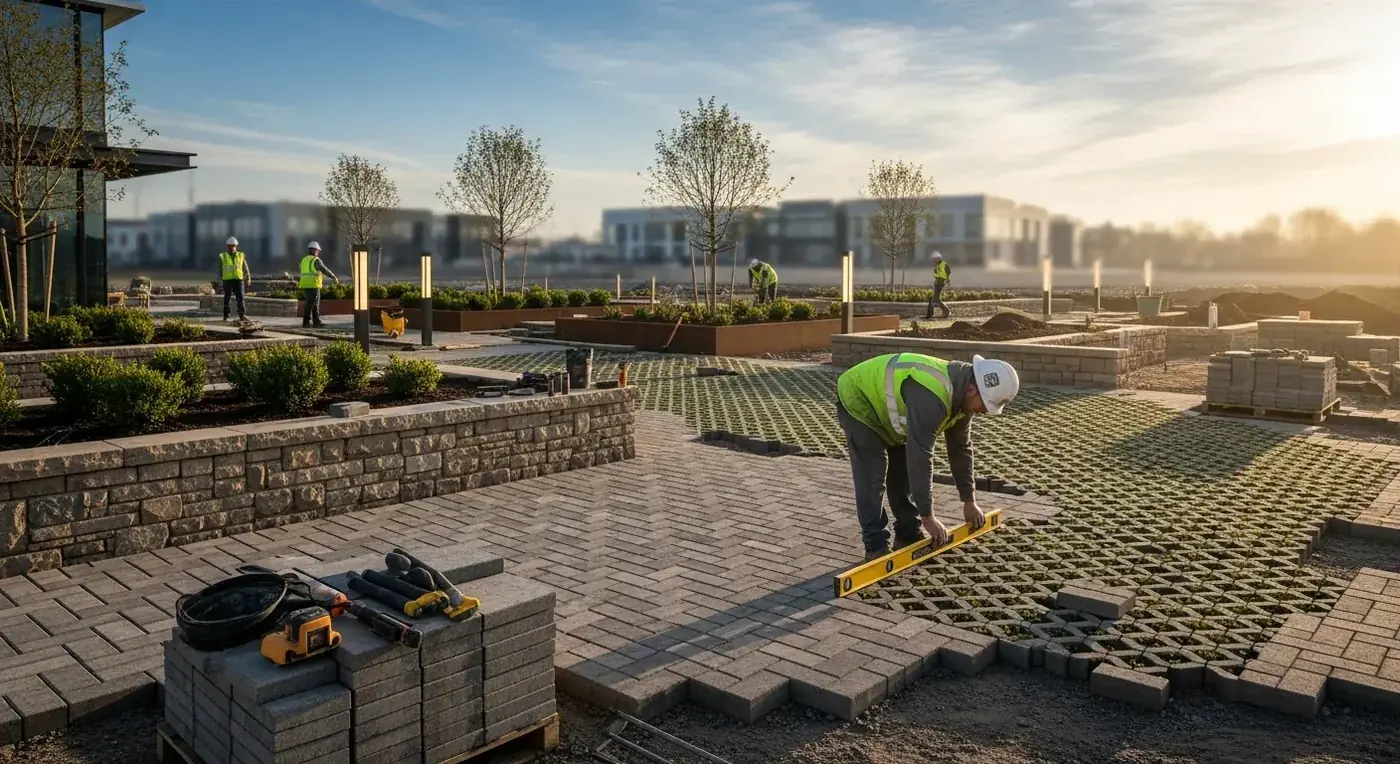
Cost depends on excavation, spoil removal, access, levels, drainage, retaining edges, hardscape interfaces, material depth and the finish that will sit above the base. The more complex the site conditions, the more important early preparation becomes.
Why are drainage and base works so important?
Drainage and base works control stability, falls, water movement and surface longevity. A premium turf, court or fit-out surface can still fail early if the base holds water, moves, or does not match the finished surface requirements.
How are landscape construction works staged?
Projects are staged through site review, set-out, excavation or demolition, drainage, base construction, edging or interface works, surface-ready preparation and handover to the finishing scope. On live sites, staging is planned around access and other trades.
What maintenance is expected after base and landscape works?
Maintenance depends on the final surface, but owners should keep drains clear, monitor edges and inspect high-use areas after major weather. Well-built bases reduce maintenance pressure by keeping the finished system stable and free-draining.
What documentation supports handover?
Handover can include care notes, installed-scope details and warranty information for relevant supplied products. For commercial clients, clear documentation helps asset teams understand what was built and how to protect it.
When is landscape construction the right first step?
It is the right first step when a site has poor levels, failing drainage, unstable base material or multiple surface interfaces. It is not a standalone cosmetic fix when the brief only needs a simple like-for-like refresh on a sound existing base.